
Dael Cuello Almario measures how city waste breaks down under heat and earns the laureate distinction
His undergraduate thesis in Agro-industrial Engineering characterised the lignocellulosic fraction of municipal solid waste in Sincelejo and calculated the kinetic parameters of its pyrolysis. The examining committee granted it the laureate distinction.
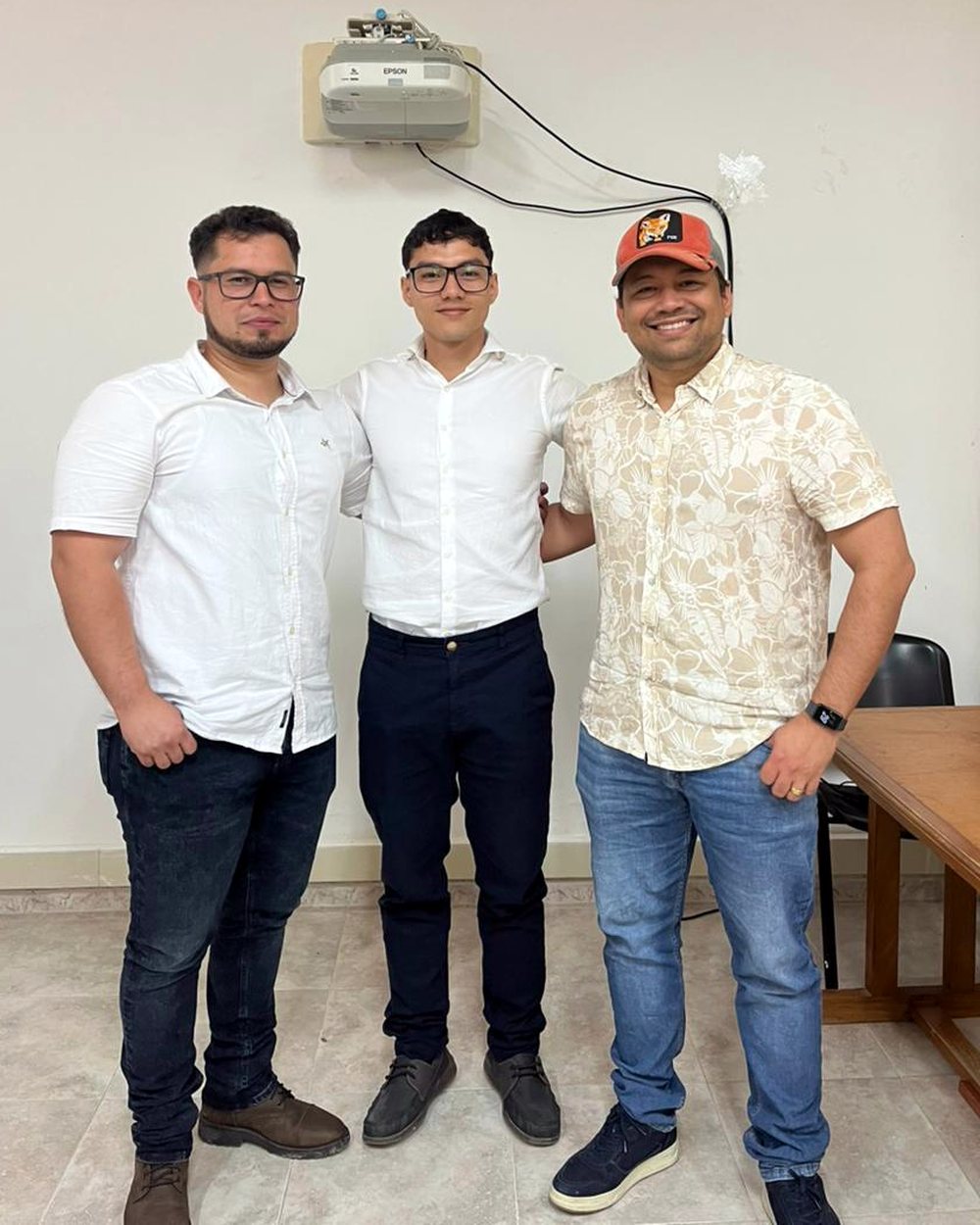


Food scraps, paper, cardboard, wood and garden trimmings. Much of what a city sends to the landfill is biomass, and biomass stores energy. Before designing a reactor to recover it, one has to know how it behaves when heated. That was the question behind this thesis on the thermogravimetric analysis of the lignocellulosic fraction of municipal solid waste in Sincelejo, supervised by Daniel Otero Meza and co-supervised by Eduardo Arroyo Dagobeth.
Dael Cuello Almario sampled four families of waste and prepared a blend in the same proportions in which they reach the El Oasis landfill. He characterised them and heated them to 950 °C without oxygen at three different rates while a thermobalance recorded every loss of mass. He found materials with 70% to 90% volatile matter, little ash and heating values of 14 MJ/kg to 18 MJ/kg, in other words a usable fuel.
Decomposition took place in three stages. First drying, then devolatilisation, in which 60% to 80% of the mass is lost, and finally char formation. Food scraps proved the most reactive and garden trimmings the most energy-demanding. Using isoconversional models and the Coats-Redfern method, the work calculated the activation energy of each fraction and identified three-dimensional diffusion as the mechanism that best describes the process.
These parameters are the basis for simulating and sizing pyrolysis processes that turn urban waste into energy, one of the priorities of INGEBIR's thermodynamics and kinetics line.