
Daniel Otero Meza defends a doctoral thesis with distinction on the energy stored in a city's waste
At Universidad de la Costa he defended a tool that helps a city decide how to recover energy from its waste, using technical, energy, economic and environmental criteria. The examining committee granted it the meritorious distinction.
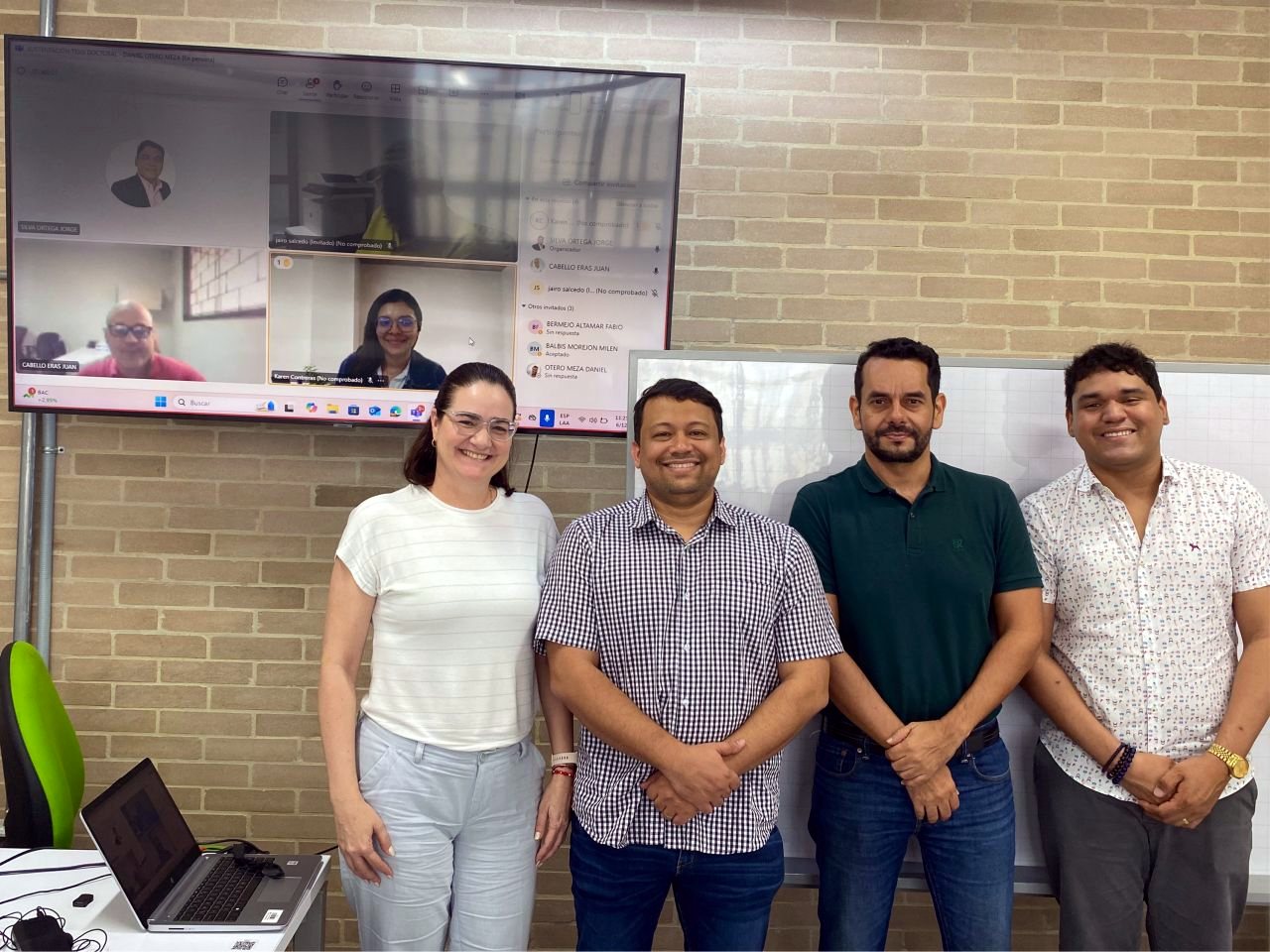

Every day, refuse trucks carry waste that still holds energy to the landfill. The doctoral thesis of Daniel Otero Meza, now director of INGEBIR, started from a practical question. What is the best way to recover that energy when data are scarce, budgets are tight and the city keeps growing? The thesis, on the energy recovery of municipal solid waste generated in the city of Sincelejo, was supervised by Juan José Cabello Eras and co-supervised by Jairo Guadalupe Salcedo Mendoza, in the PhD programme in Energy Engineering at Universidad de la Costa.
The answer is a methodological tool with three parts. A SARIMAX time-series model projects how much waste will arrive over the coming decades. A set of indicators measures the technical, energy, economic and environmental potential of four routes, namely incineration, anaerobic digestion, gasification and landfill with biogas capture. Finally, the ENTROPY and TOPSIS methods rank those routes with weights calculated from the data themselves, without relying on the opinion of an expert panel.
Applied to Sincelejo, the tool anticipates that waste disposal will grow by 170% by 2050, a volume the current system is not prepared to handle. Landfill with biogas capture came out as the most balanced option for a city of that size, followed by gasification, which avoids more emissions but requires investments that are not justified today. The tool also shows what would change that ranking, such as a higher price for carbon credits.
Daniel Otero Meza completed his doctorate with the Bicentennial Doctoral Excellence Scholarship. The tool was published in 2025 as a book by Editorial Unisucre, and the questions the thesis opened remain alive in the group, from machine-learning projections of waste to the national atlas of green hydrogen obtainable from landfill gas.